Title
Content



Title
Content
Understanding Ultraviolet C (UV-C)
UV-C light, which spans the 200-280 nanometer (nm) range, is most germicidal between 260-265 nm. This narrow band represents the ideal wavelength for inactivating microbial organisms. At this range, the light energy is readily absorbed by the nucleic elements (DNA or RNA) of the microorganism, preventing replication and leading to the organism's eventual death.
Various lamp types generate UV-C:
UVD Robots with Low-Pressure Mercury Lamps (254 nm): Key Advantages and Considerations
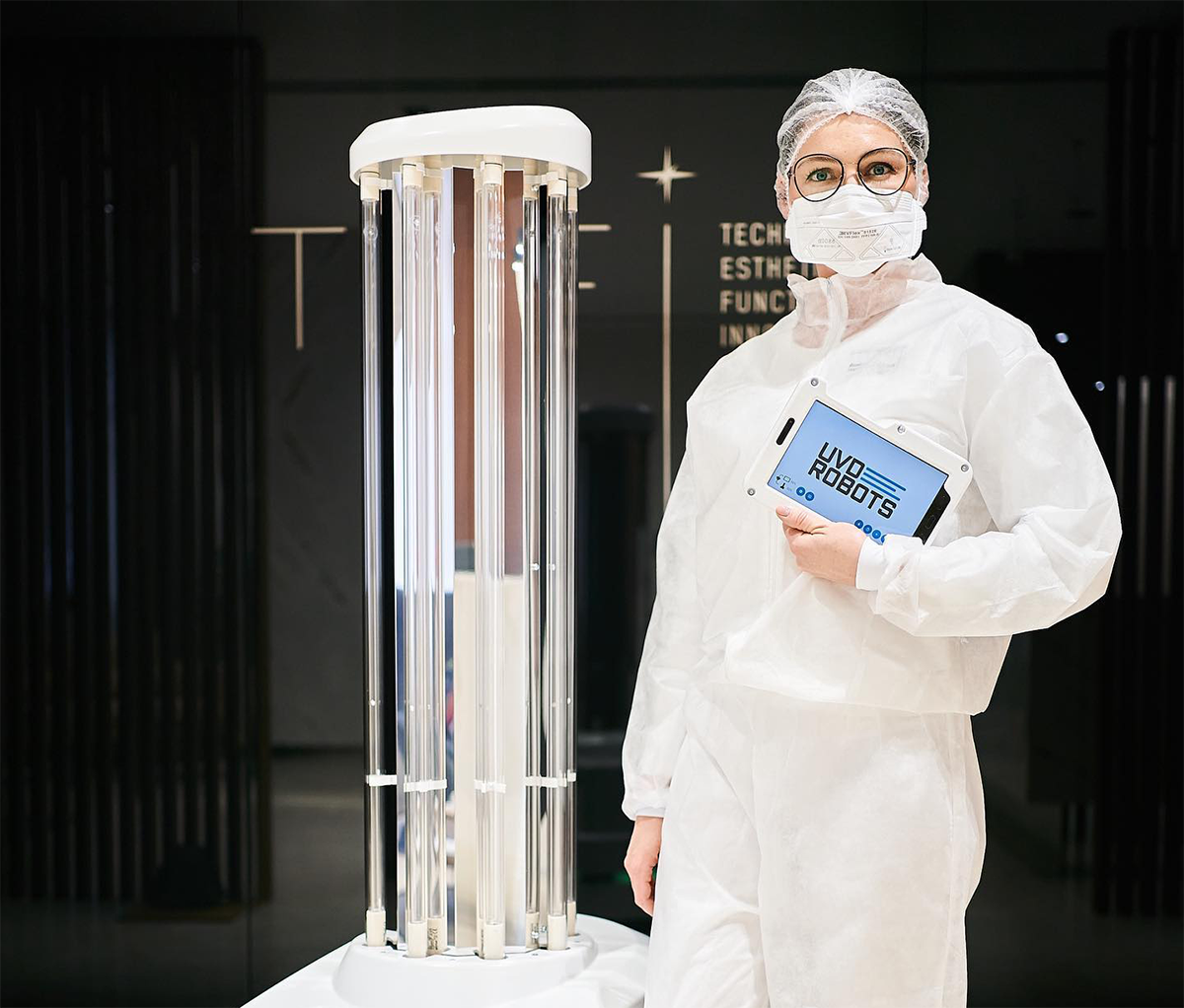
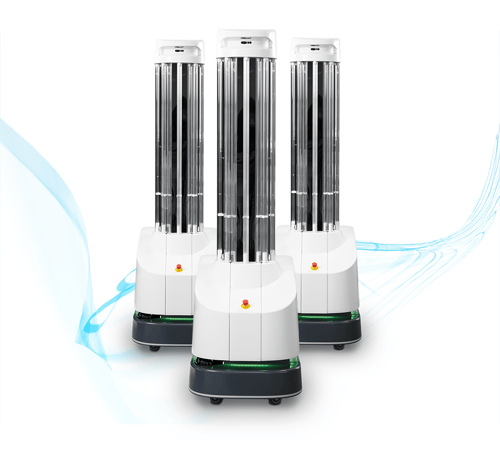
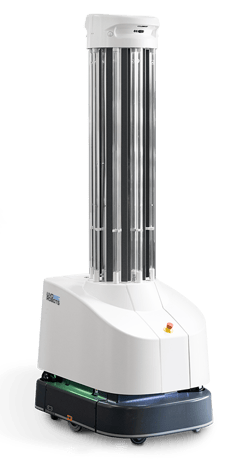
UVD Robots utilize low-pressure mercury lamps, which are highly effective for germicidal action because they radiate approximately 95% of their energy at the optimal 254 nm wavelength. This characteristic ensures rapid inactivation, even of resistant fungal and bacterial spores. Deployment is targeted for room-surface disinfection as an enhancement to critical terminal cleaning processes.
Primary Benefits of UVD Robot Disinfection:
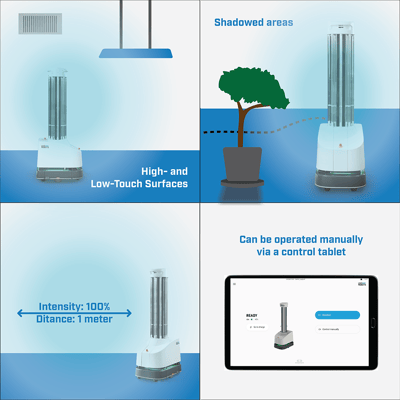
Optimal Germicidal Wavelength: Produces the most effective germicidal wavelength (254 nm) for quick inactivation of microbial contaminants.
Consistency and Reliability: The robotic platform ensures a repeatable and consistent disinfection process.
Mobility and Flexibility: The mobile design eliminates the need for permanent mounting or integration into a building's structure, offering maximum flexibility.
Cost-Effective Maintenance: Low-pressure mercury lamps have a long shelf life and are inexpensive to replace.
Minimized Material Degradation: Studies have shown that daily dosing of UV-C on surfaces at shortened exposure times would take many, many years before material degradation would initiate.
Important Operational Consideration:
Unoccupied Environment Required: The primary limitation is that irradiation must occur in an unoccupied space. This can be managed through strategic workflow planning.
Accidental Breakage of Lamps: Although infrequent, in the event of accidental breakage of a quartz-covered lamp, the room should be evacuated for 30 minutes to allow for ventilation. Glass cleanup should then follow.
Far UV-C (222 nm): Overview of Krypton Chloride Excimer Lamp Technology
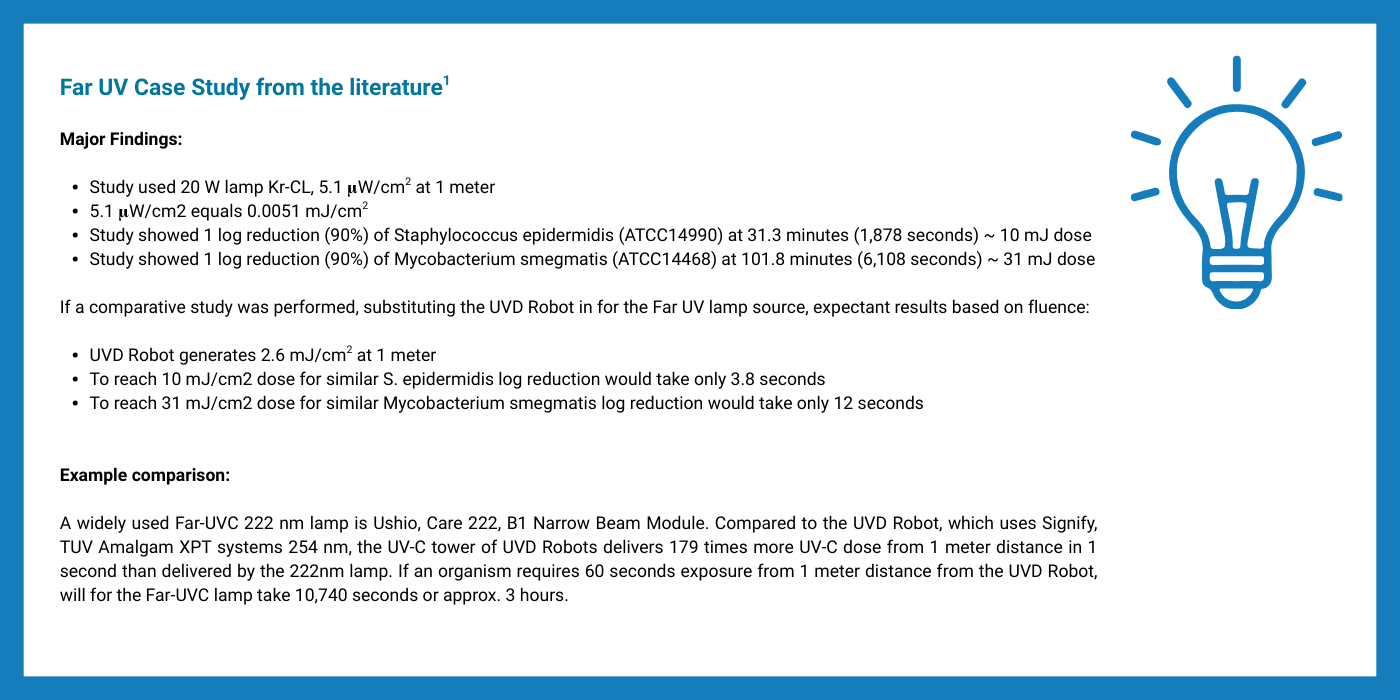
Far UV-C has emerged as an alternative method for continuous, slow disinfection of air and surfaces, utilizing 222 nm UV-C light. This technology is incorporated into various devices for close-proximity inactivation, including handheld wands, tabletop lamps, disinfection booths, step-on pads, and ceiling-mounted units.
Key Advantages of Far UV-C:
Continuous Disinfection: Offers ongoing, active disinfection of both air and surfaces.
Human Presence Safety: When operated within regulatory limits, the shorter wavelengths of Far UV-C do not cause damage to skin and eye cells, allowing devices to remain active while people are present.
Airborne Microbial Reduction: Studies indicate that consistent Far UV-C exposure can significantly lower concentrations of airborne microorganisms in indoor settings.
Important Operational Considerations:
UV-C Light Emitting Diodes (LEDs): Overview and Application
UV-C LEDs are compact and efficient light sources, operating in the germicidal ultraviolet-C range (260-280 nm). They are utilized for disinfecting air, surfaces, and water in both consumer appliances (such as coffee makers or refrigerators) and various point-of-use applications.
Key Benefits
Output Stability: Maintaining consistent UV-C output requires a careful system design, often utilizing a constant current, as intensity can diminish over the product's lifespan.
System Integration: Proper system design is essential to ensure reliable and consistent performance throughout the device's operational life.
Summary
The selection of the appropriate UV-C light source is determined by the specific application.
For critical environmental decontamination in healthcare, cleanroom, or laboratory settings, autonomous UV-C devices operating at 254 nm, such as UVD Robots, are the most efficient and effective choice. These devices utilize low-vapor-pressure mercury lamps, which are the most common UV-C technology. Their main advantage is their capacity to inactivate targeted microorganisms effectively and rapidly prepare the area for continued use. Autonomous devices enhance whole-room disinfection by minimizing shadows, providing close-proximity irradiation to surfaces, and ensuring consistent, repeatable UV-C dosing, which is essential for significant and quick bioburden reduction on a large scale. Workflow strategies are employed to minimize human exposure while maximizing germicidal action.
Far UV is better suited for applications in public areas, airborne disinfection, or for close-proximity devices used on small items and personal protective equipment, especially when rapid, whole-room disinfection is not the primary need. This is because the low exposure risk to humans makes Far UV ideal for public use scenarios.
UV-C LEDs offer an alternative for small devices and point-of-use applications where traditional mercury lamps are too large to fit.
Curious to learn more about the UVD Robot?
UVD Robots provide fully automated disinfection solutions with predictable, and cost effective outcomes in various facilities.
Click the button to learn how our UVD Robots are using UV-C light to eliminate more than 99.99% of selected microorganisms in the environment by disinfecting with UV-C light.

1. Leow CH, et.al., Investigations on the surface disinfection efficacy of far-UVC 222 nm germicidal irradiance device in a controlled environment and field test. J Environ Health Sci Eng. 2024 Jul 31;22(2):569-577.